French songs for the classroom, by level and grammar point
A song is probably the best-value material you can bring into a French class. A chorus is a sentence your students will hear ten or twenty times without getting bored, and that they often keep singing on their way out of the room. For grammar that is ideal: repetition does the work that exercises struggle to do.
You still have to pick the right song. Many "French songs for the classroom" lists offer the same classics from the 1960s to the 1990s. They are lovely, but your students will never hear them on the radio or on social media. This article presents the eight current songs on the Parisly Songs shelf, sorted by level and by grammar point, with an activity you can use as it is.
The songs, level by level
| Title | Artist | Level | Grammar point |
|---|---|---|---|
| Toc toc | Patrick Sébastien | A1 | « on » meaning "someone" |
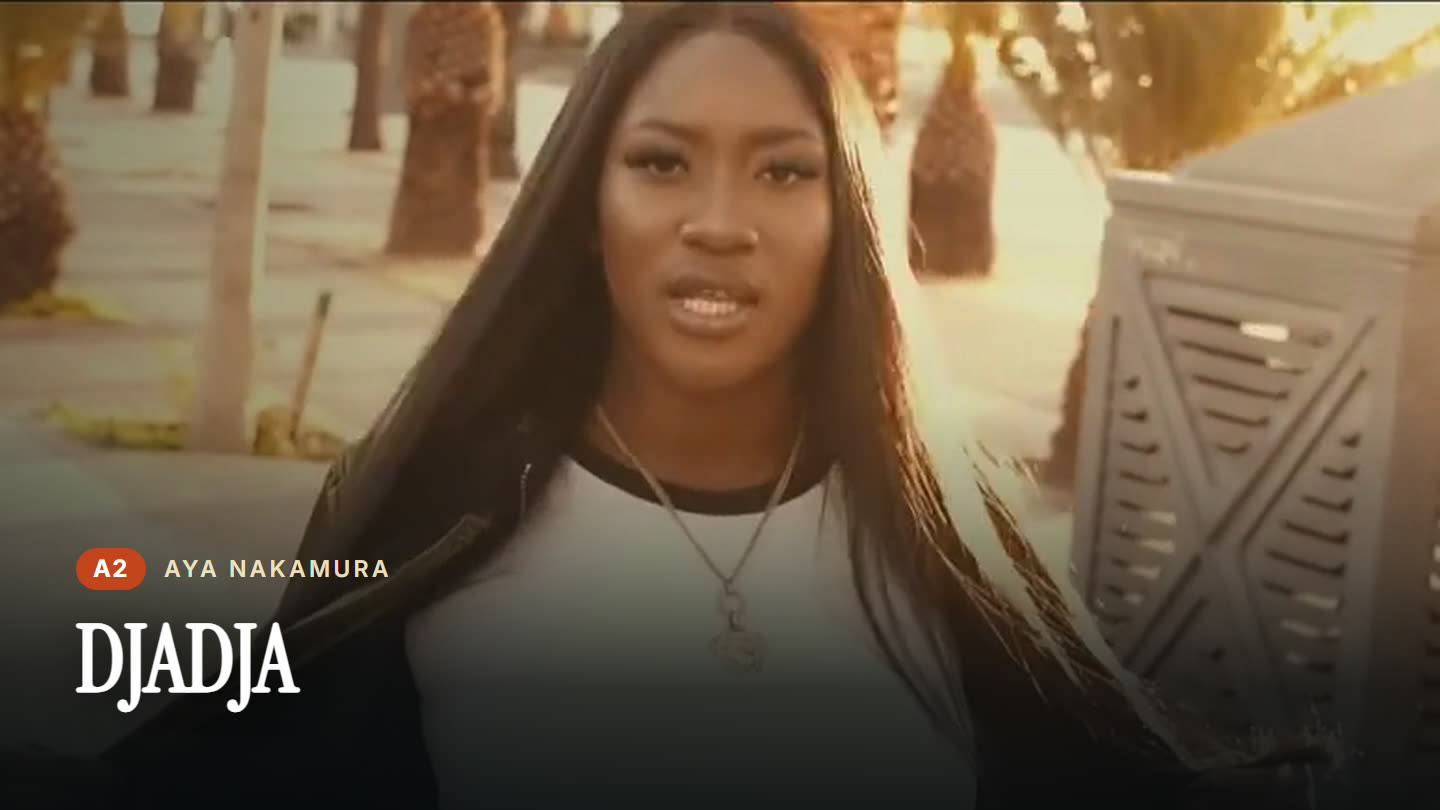
| Djadja | Aya Nakamura | A2 | Negation without « ne » |
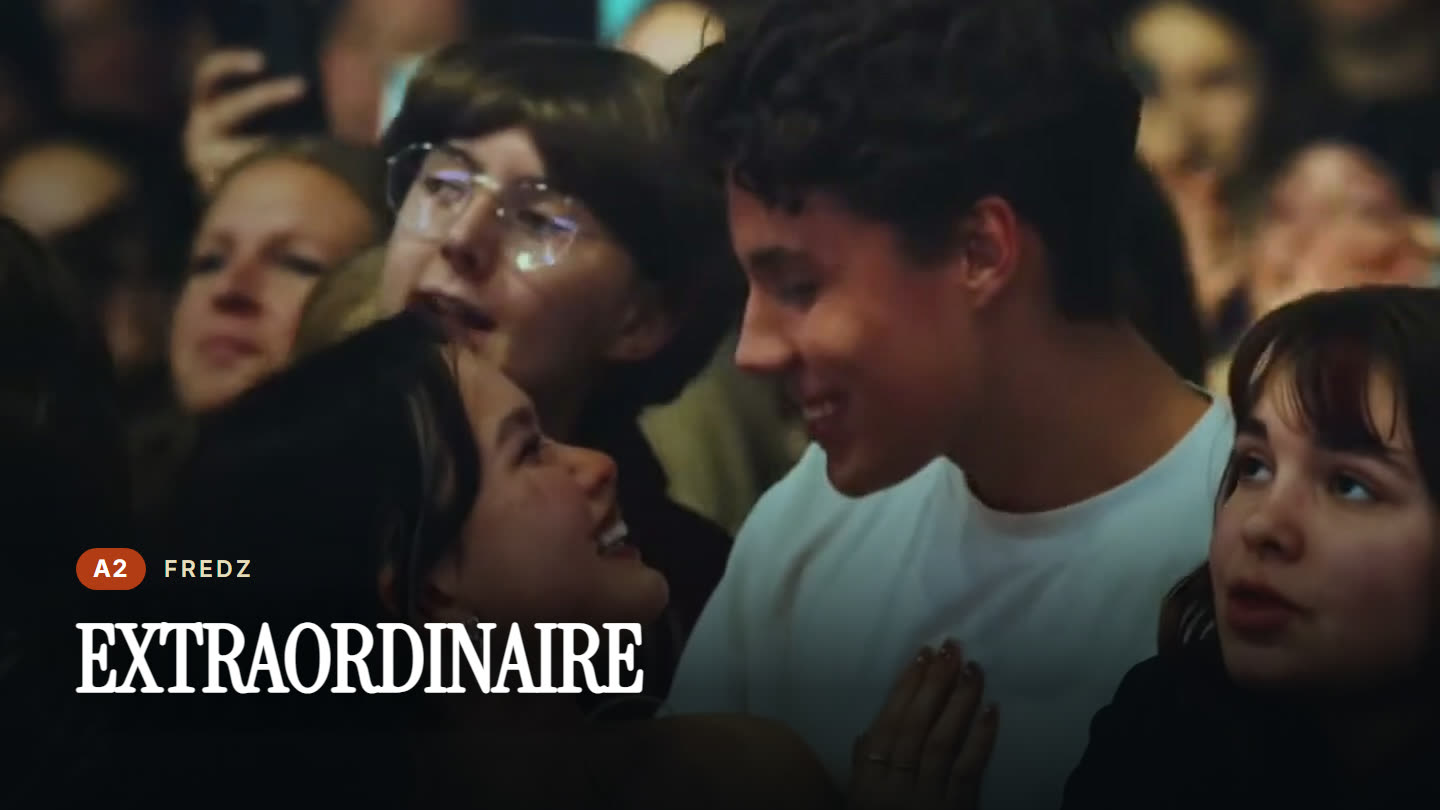
| Extraordinaire | Fredz | A2 | faire + infinitive |
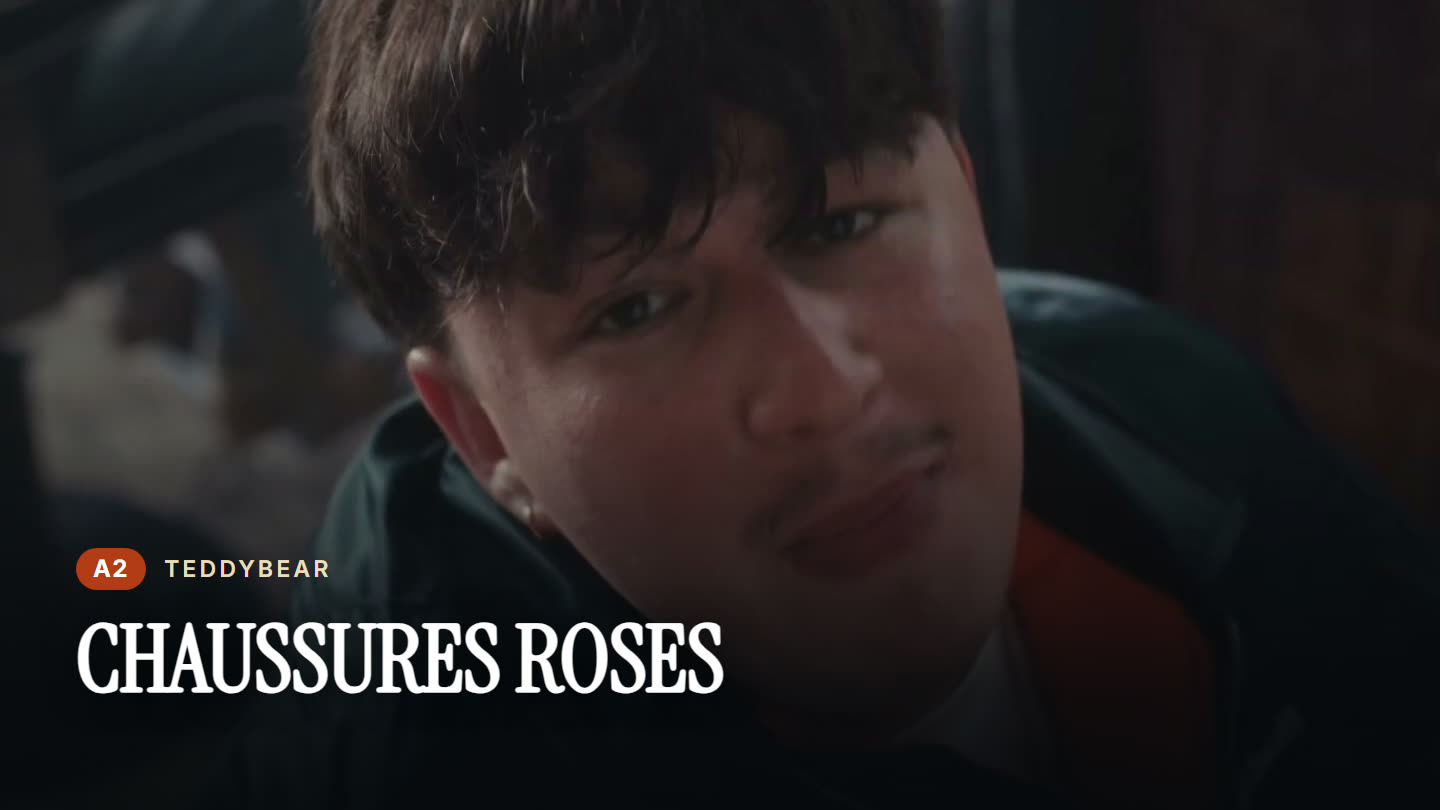
| Chaussures roses | Teddybear | A2 | Questions with « est-ce que » |
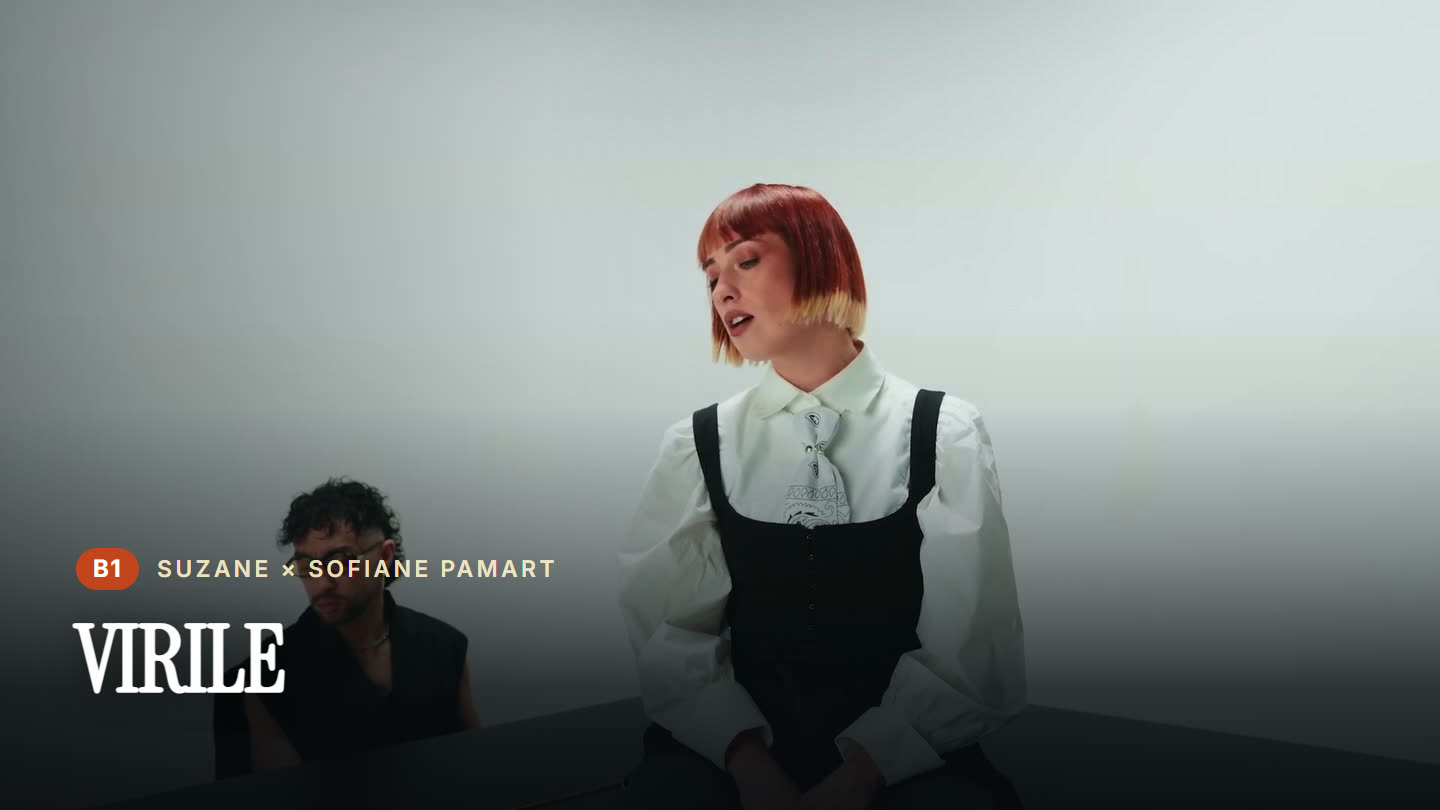
| Virile | Suzane × Sofiane Pamart | B1 | Clauses with « que » |
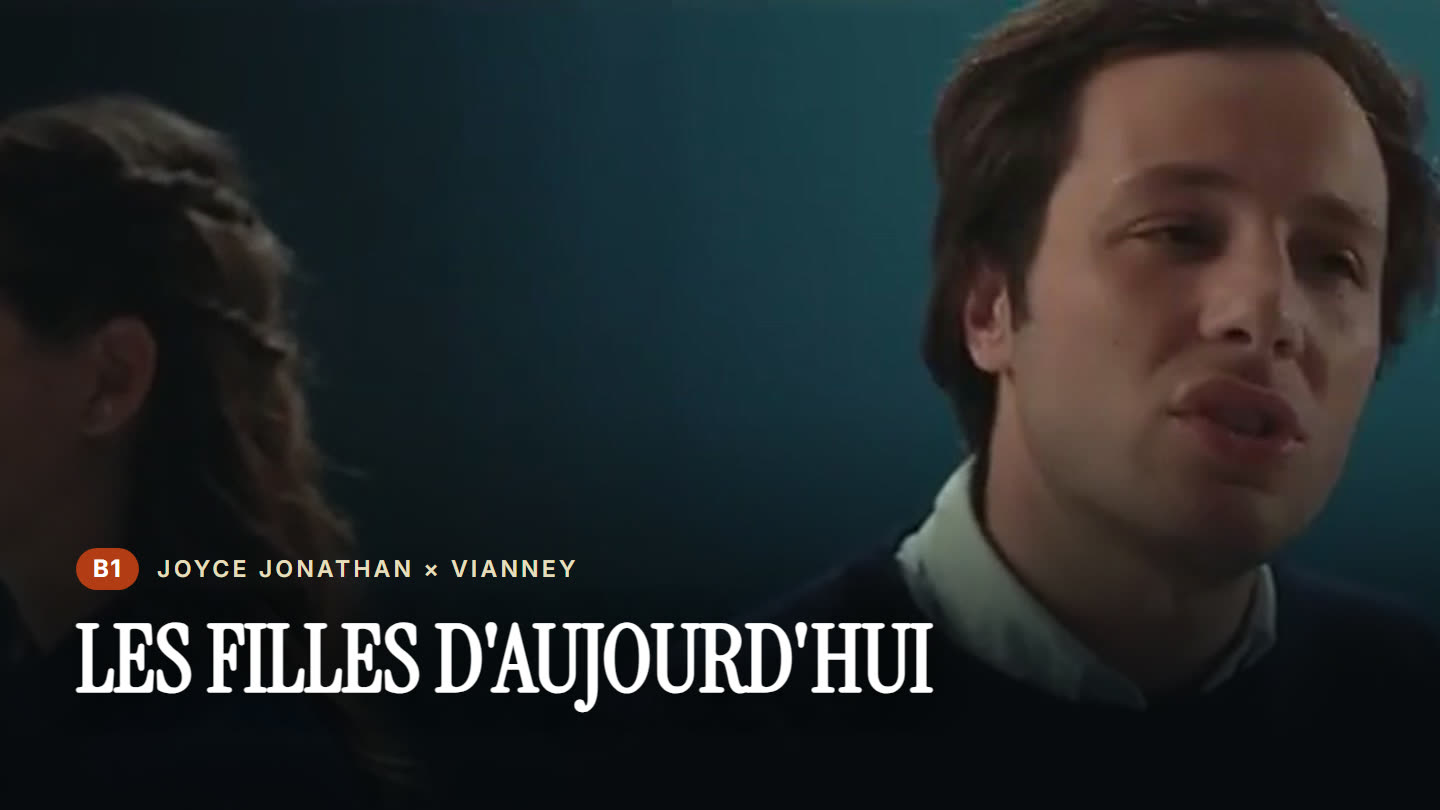
| Les filles d'aujourd'hui | Joyce Jonathan × Vianney | B1 | Questions with inversion |
| Te rencontrer encore | ESTL | B1 | The present conditional |
| Fille à papa | Vacra × La Rvfleuze | B2 | The « à » that describes |
Each song opens on the shelf with the video, the lyrics line by line and a guided lesson on its grammar point. The same songs are sorted by level on the A2 songs and B1 songs pages, and gathered for teachers on French songs for teachers.
A1: « on », the pronoun everyone uses
At A1, students usually meet « on » as another way of saying « nous ». In Toc toc, « on » means someone: a person you don't know. It is a very common spoken use, and a simple song lets students hear it without a long explanation.
A2: three points of everyday spoken French
The three A2 songs work on structures students hear everywhere but rarely find in their textbook.
- Djadja uses negation without « ne », the negation of real conversation. It is the perfect moment to compare it with the written form and explain when each one is used.
- Extraordinaire works on faire + infinitive (as in faire rire or faire peur): a short, very productive structure students can reuse straight away.
- Chaussures roses comes back to questions with « est-ce que », the most neutral and safest way for an A2 student to ask.
B1: clauses, inversion and the conditional
- Virile builds on clauses with « que »: good material for complex sentences in speech.
- Les filles d'aujourd'hui lets you compare the three ways to ask a question (intonation, « est-ce que », inversion) and talk about register: when does inversion sound natural?
- Te rencontrer encore is the song for the present conditional, the tense of wishes, regrets and hypotheses. If you are looking for a French song about the conditional, this is the one.
B2: the « à » that describes
Fille à papa starts from a well-known expression to work on the preposition « à » describing a person or a thing by one of its features. It is a fine point, typical of B2, where grammar moves from rules to nuance.
What the shelf doesn't cover yet
To be honest: there is no song yet for the passé composé, the imparfait or the futur simple, three of the most searched grammar points for French songs. In the meantime, other Parisly shelves work on these points with authentic material that you can pair with a song at the same level:
- The passé composé: the scene from the series Dix pour cent, « Le lendemain matin » (B1).
- The imparfait: France Inter's podcast Une histoire et… Oli, « La mouche qui cherchait l'amour » (A2), where the imparfait is used to describe.
- The futur simple: the Kirikou scene « Petit et grand » (A2, quand + futur simple), or the Roi Lion scene with Zazu, « Je voudrais déjà être roi » (B1).
- The subjunctive: the Roi Lion scene with Scar, « La part du lion » (B1).
All the film scenes are sorted by level on Learn French with movies and series.
A ready 45-minute activity
This structure works with every song in the table.
- Before listening (5 min). Show the title and the cover. Students guess: what is the song about? What mood?
- First listen, no lyrics (5 min). One question only: which words did you recognise? Write them on the board without correcting.
- Second listen, gapped lyrics (10 min). Remove only the words that carry the grammar point: the verbs in the conditional, the questions, the « que ». Students listen for one precise form, not for everything.
- Noticing (10 min). With the full lyrics, students find every example of the grammar point and work out the rule themselves.
- Reuse (10 min). A short piece modelled on the song: a personal verse, three wishes in the conditional, a list of questions to ask the artist.
- To finish (5 min). Sing the chorus together. It is not a bonus: it is the part that fixes the structure in memory.
One tip: don't hand out printed lyrics before the second listen. Once the text is in front of them, students read instead of listening.
And for students working on their own?
The method is the same, only simpler: listen once with nothing, once reading the lyrics, then once trying to sing along. On Parisly, students can hover any French word to see its English, and the guided lesson asks questions about what they just heard. More on that in French songs to learn French.
Every shelf has free lessons, and no account is needed to start. On the Songs shelf, Djadja is open to everyone: a good first try.
For teachers
Any song can be sent to a student in one click, with its homework, from the Parisly library. And if you build lessons around the news, Parisly turns today's news into a ready-to-teach lesson in about 30 seconds: it is all explained on Parisly for teachers.