French songs to learn French: easy songs by level, A1 to B2
A chorus is a sentence you will hear twenty times without getting bored. No textbook can do that. That is why songs are one of the best tools for learning French — as long as you pick songs at your level and study them, rather than just playing them in the background.
Here is how to choose, how to study a song in twenty minutes, and a list of French songs sorted by level and by the grammar point they repeat.
Why songs work so well
Songs give you three things at once:
- Repetition you enjoy. The chorus comes back four or five times, and you will replay the song anyway.
- Rhythm that sticks. Words set to music stay in your memory far longer than words in a list. You will catch yourself humming a verb ending a week later.
- Real pronunciation. Singers link words together the way French people do in speech, which trains your ear for liaison and elision.
The catch: lyrics are often poetic, full of slang, or sung fast. A song that is too hard just becomes background noise. Level matters.
How to study a French song in 20 minutes
- Listen once, just for pleasure. Don't read anything. What is the mood? Happy, angry, in love?
- Listen again with the French lyrics in front of you. Follow line by line with your finger if it helps.
- Find the chorus and understand it completely. Hover the words you don't know, read the English, then listen to the chorus alone until you can sing it.
- Spot the grammar point. Most songs lean on one structure again and again — a question form, a conditional, a negation. Name it, then find every example in the song.
- Sing along. Out loud, even badly. Singing is speaking practice in disguise: your mouth learns the sounds.
Do this with one song a week and you will learn more than from a playlist of fifty.
French songs by level
All of these are lessons on the Parisly songs shelf: the lyrics line by line, the French under the English, the vocabulary picked out, and the grammar point explained step by step.
| Song | Artist | Level | Grammar point |
|---|---|---|---|
| Toc toc | Patrick Sébastien | A1 | the pronoun on = someone |
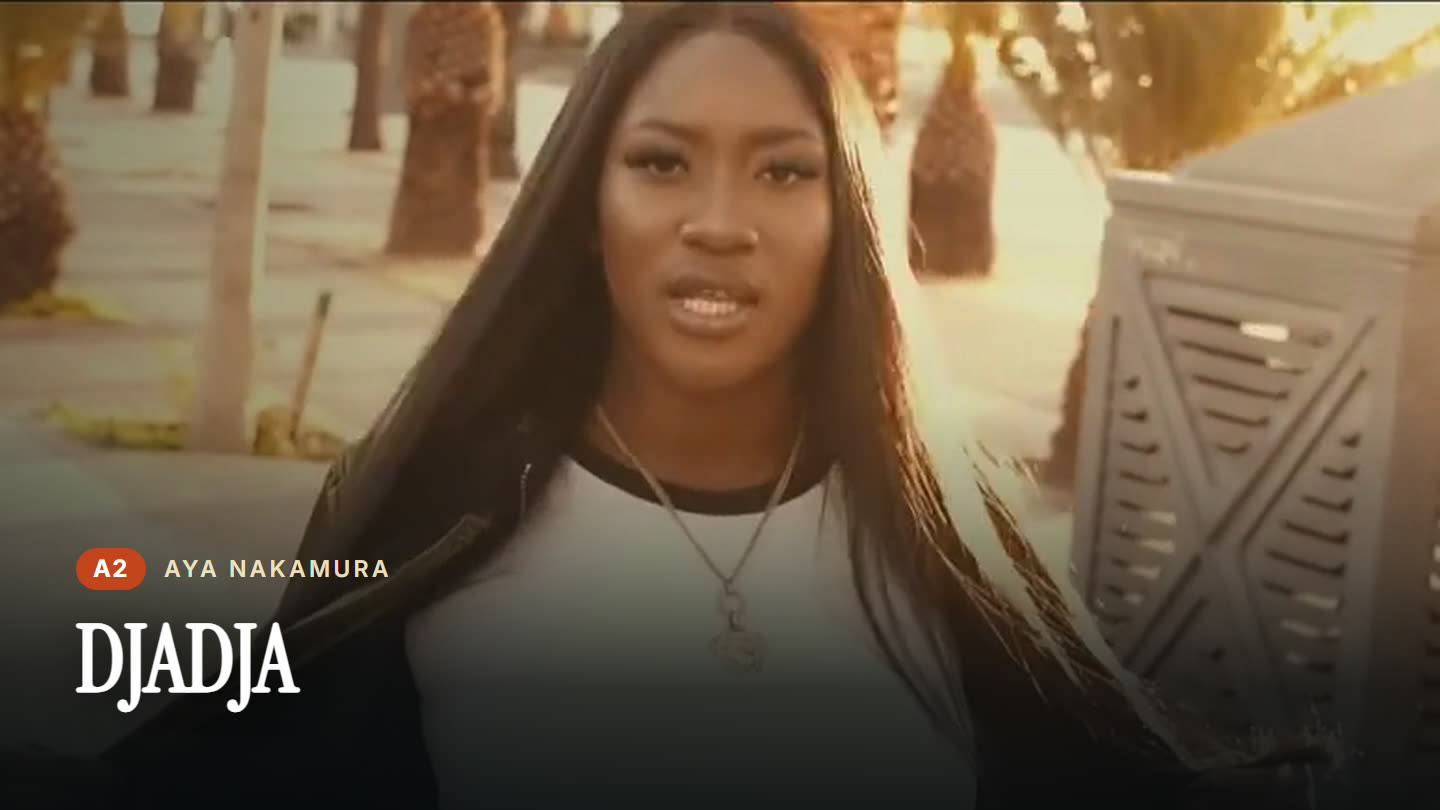
| Djadja | Aya Nakamura | A2 | negation without ne |
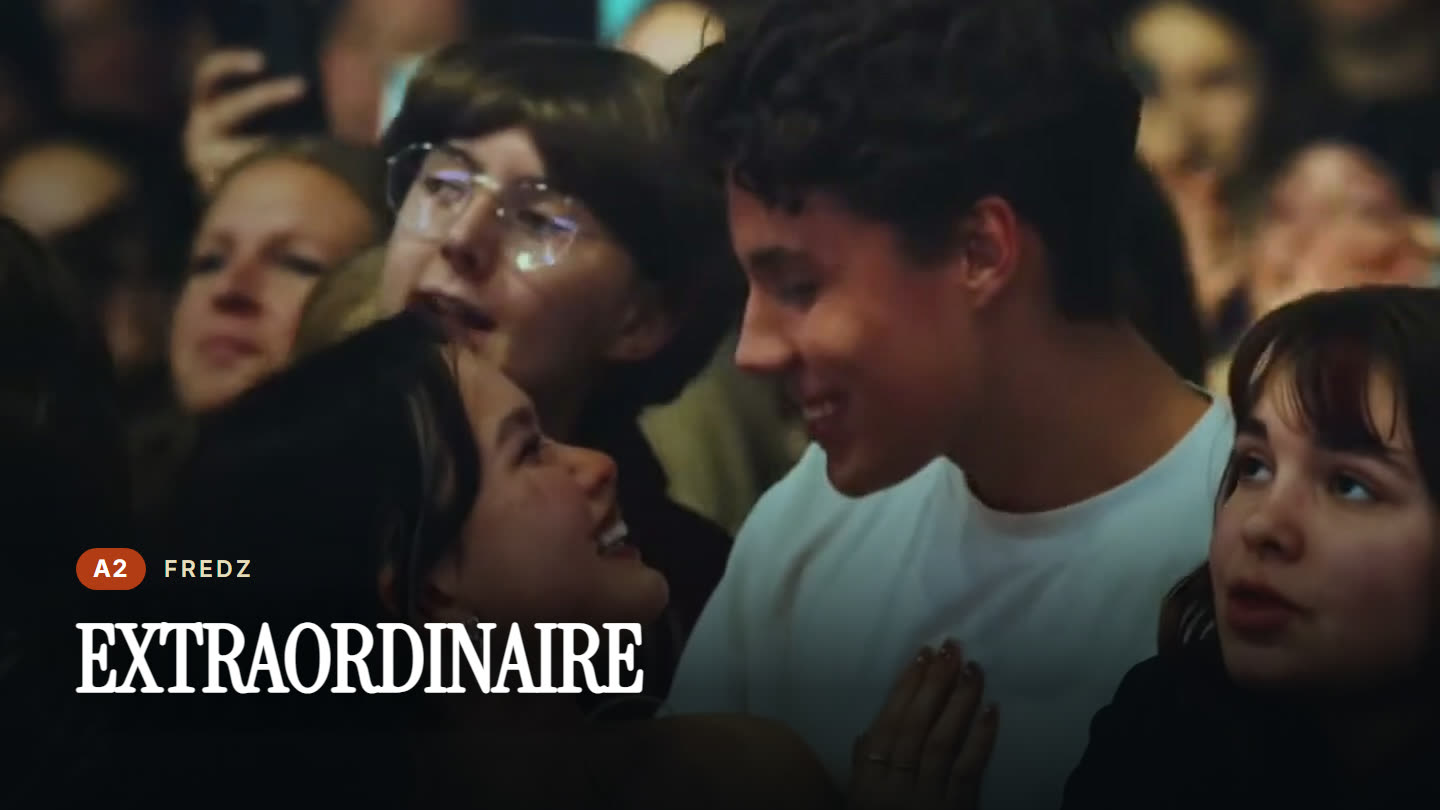
| Extraordinaire | Fredz | A2 | faire + infinitive |
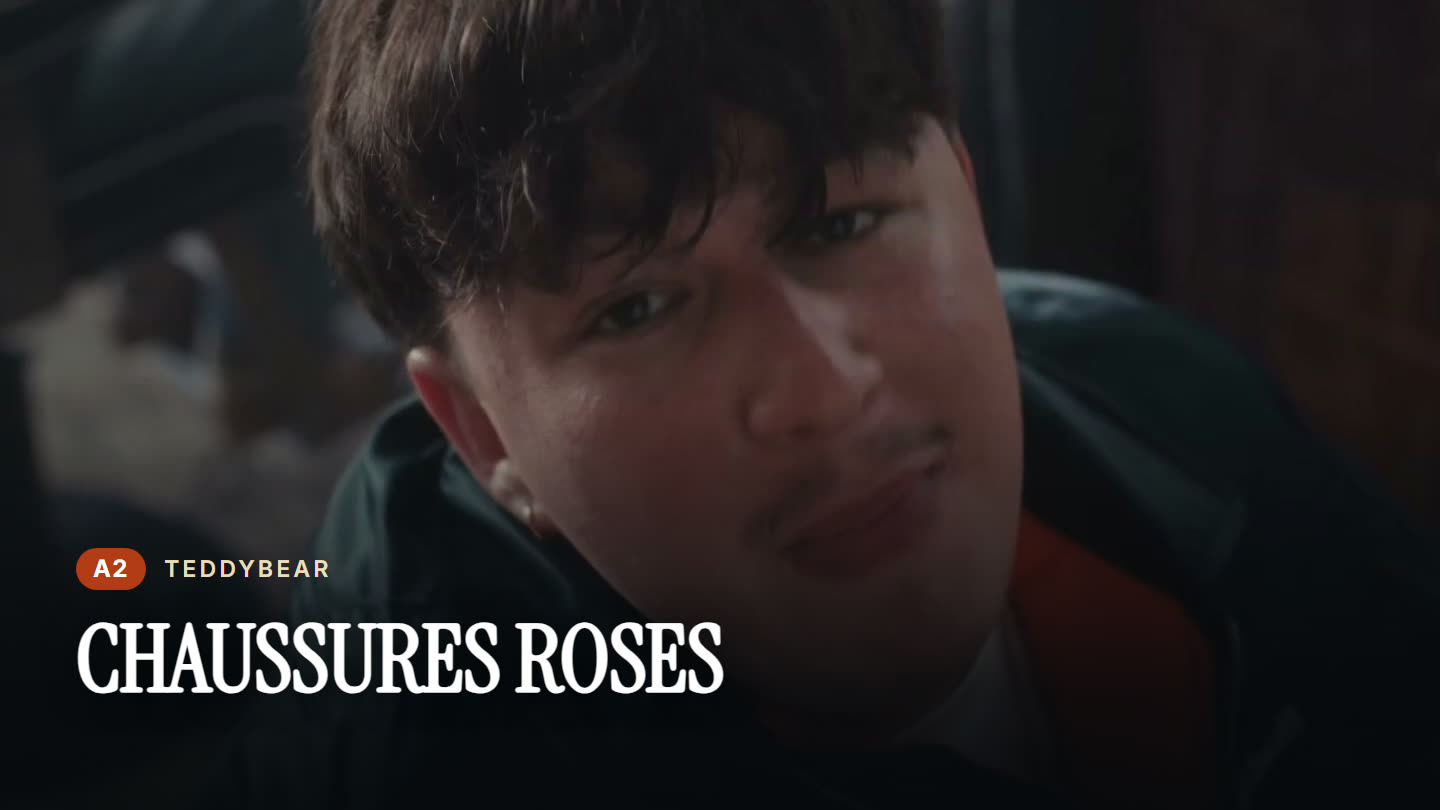
| Chaussures roses | Teddybear | A2 | questions with est-ce que |
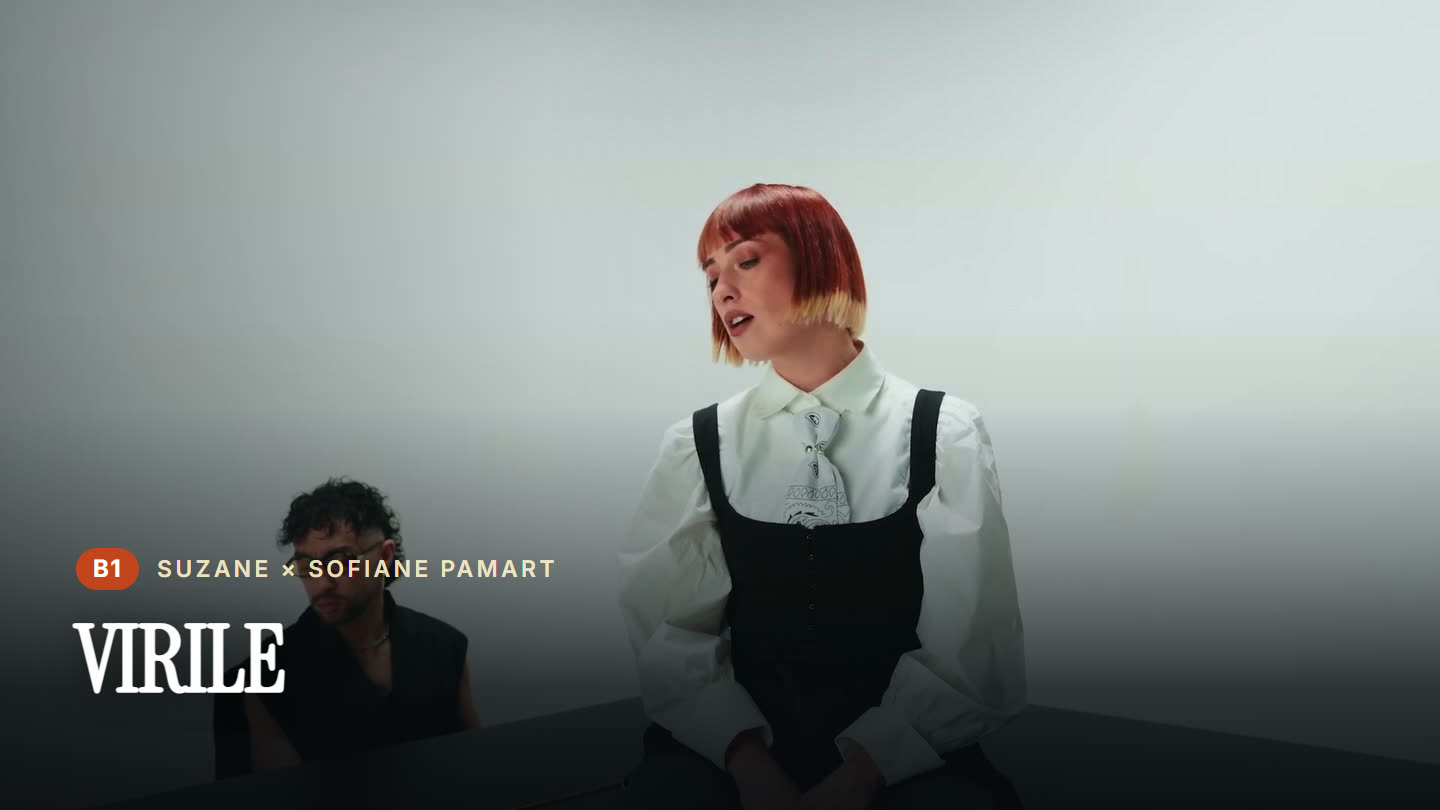
| Virile | Suzane × Sofiane Pamart | B1 | clauses with que |
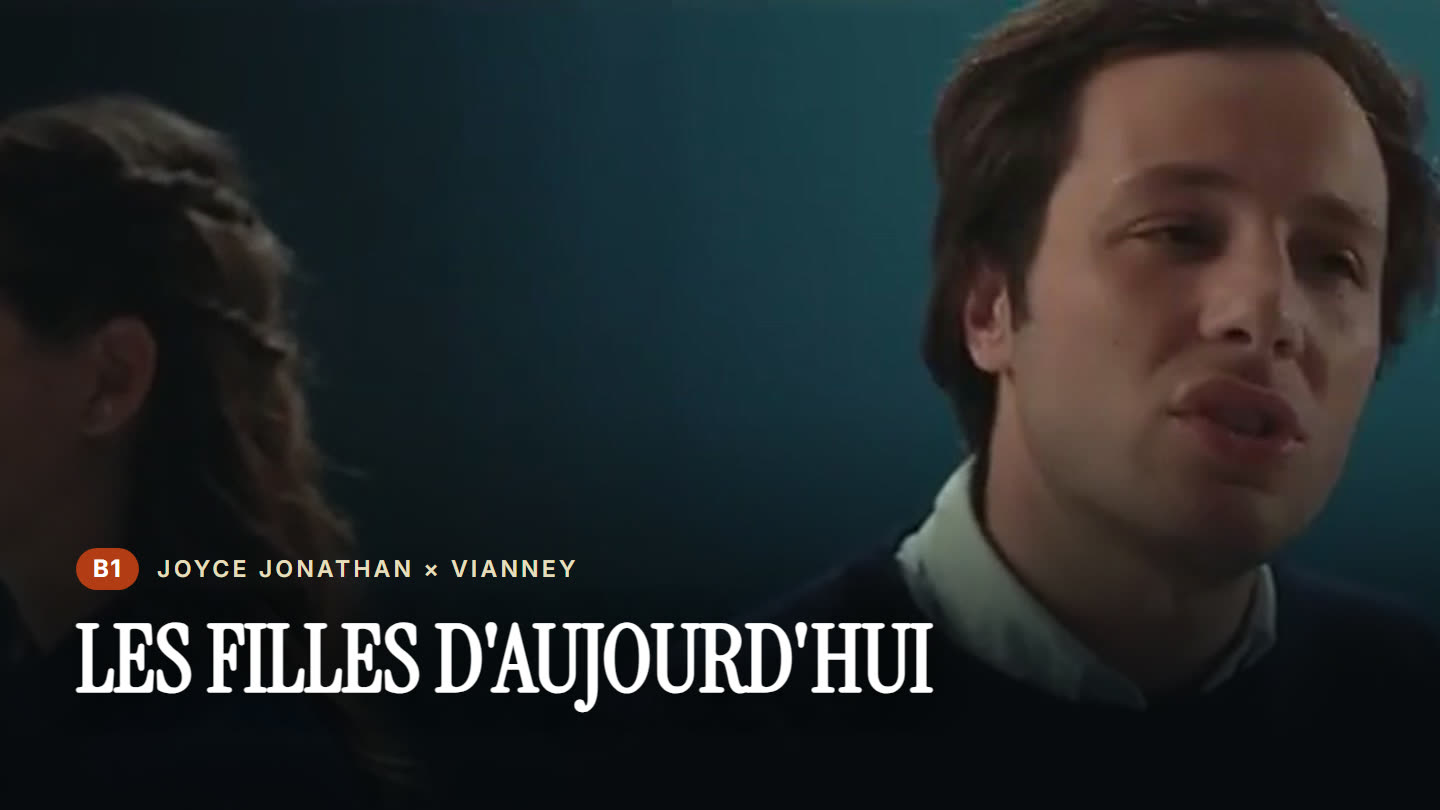
| Les filles d'aujourd'hui | Joyce Jonathan × Vianney | B1 | questions with inversion |
| Te rencontrer encore | ESTL | B1 | the present conditional |
| Fille à papa | Vacra × La Rvfleuze | B2 | the à that describes |
Djadja is free — you can open it without an account.
Easy French songs for beginners (A1–A2)
If you are a beginner, look for songs with a short, repetitive chorus, everyday words and a clear voice.
Toc toc by Patrick Sébastien is the shelf's A1 song: short lines and plenty of repetition, a good first song. It shows you on used to mean "someone", which you hear constantly in spoken French.
At A2, Djadja by Aya Nakamura is catchy and teaches you something textbooks skip: in real French, people drop the ne of the negation — c'est pas, not ce n'est pas. Chaussures roses by Teddybear drills questions with est-ce que, the easiest way to ask anything in French. Extraordinaire by Fredz shows faire + infinitive (faire rire, "to make someone laugh"), a structure you will use every day.
See all of them on the A2 songs page.
Songs for intermediate learners (B1–B2)
At B1 the lyrics get denser and the ideas more interesting. Virile by Suzane and Sofiane Pamart is full of clauses with que. Les filles d'aujourd'hui by Joyce Jonathan and Vianney asks its questions with inversion, the more formal way. Te rencontrer encore by ESTL is built on the present conditional, the tense of wishes and "what if".
At B2, Fille à papa by Vacra and La Rvfleuze is quick, current French, and shows how à describes someone or something.
Browse the B1 songs page for the full list.
Mistakes to avoid
- Only listening in the background. Passive listening feels productive and teaches you very little. Twenty active minutes beat three hours of background music.
- Starting with old classics. Brel and Piaf are wonderful, but their French is poetic and sometimes dated. Start with current songs, then go back to the classics once your ear is ready.
- Translating every word. Understand the chorus perfectly, get the gist of the verses. That is enough.
- Skipping the grammar. A song that repeats the conditional ten times is a free conditional lesson. Use it.
- Not singing. Your mouth needs practice too.
Beyond songs
Songs are a brilliant way in, but you also need longer stretches of speech. When you are ready, try short film scenes — see Learn French with movies and series — or the podcasts shelf. Not sure where to start? Find your level first.
Questions learners ask
What is the best French song for beginners?
A song with a short chorus, simple words and a clear voice. Toc toc at A1 and Djadja at A2 are good first songs.
Can I learn French only with music?
Music will give you vocabulary, pronunciation and confidence. On its own it won't give you grammar or conversation. Combine songs with short lessons and you have a strong routine.
Should I read the lyrics in English or French?
French first, with the English only for the lines you don't get. Reading the whole translation first turns the song into an English poem.
How many songs should I learn?
One a week, properly. By the end of a year that is fifty songs you can sing — and understand.
I'm a French teacher. Can I use these songs in class?
Yes. Each song lesson can be sent to a student in one click, with its homework. See Parisly for teachers.