French podcasts with transcripts: listening practice by level
Podcasts are the closest thing to living with a French speaker: one voice, talking about one idea, for minutes at a time. They are also easy to waste. Put one on while you cook and you will understand the words you already knew and nothing else.
The difference between background audio and real progress is the transcript. Here is why, how to use one, and which French podcasts to start with at your level.
Why a transcript changes everything
When you miss a word in a podcast, it is gone. You don't know whether it was a word you have never seen or a word you know but didn't recognise at speed. Usually it is the second — and that is exactly the skill listening practice should train.
With the transcript beside the audio, you can stop on the sentence you missed, read it, hear it again, and connect the sound to the word. Do that a few times and the same word will jump out at you next time. That is what people mean by comprehensible input: French you can almost follow, made understandable so that your brain can absorb it.
A method for one extract
- Listen once without the text. Just follow the idea.
- Listen with the transcript. Mark the sentences that surprised you.
- Loop the hard sentences. Listen to each one three or four times. Say it out loud with the speaker — this is called shadowing, and it is brilliant for pronunciation.
- Hover the unknown words. Keep five, not twenty.
- Learn the grammar point. Each extract on the shelf is built around one structure the speaker uses naturally.
- Listen a final time without the text. Notice how much clearer it is.
A two-and-a-half-minute extract done this way is a full lesson. That is why the extracts on the shelf are short: forty-eight minutes of audio is not a longer lesson, it is a different activity.
French podcasts on the shelf, by level
Let's be honest first: the podcast extracts on Parisly mostly start at B1. Real podcasts are made for people who already speak French. There is one gentle exception.
A2: a bedtime story
La mouche qui cherchait l'amour comes from France Inter's « Une histoire et… Oli », stories for children read aloud. It is slow, warm and clear, and it teaches the imparfait for describing. A perfect first "real" podcast.
If you are a true beginner, start with stories instead — see French short stories for beginners.
B1: InnerFrench and French radio
InnerFrench is a podcast made for intermediate learners: clear speech, interesting topics, natural French. Its episodes are on the shelf as short extracts, each with its own grammar point:
| Episode | Grammar point |
|---|---|
| Pourquoi les Français ne vont plus au restaurant ? | the imparfait for how things used to be |
| S'ennuyer au travail, le secret du bonheur ? | tellement… que: consequence |
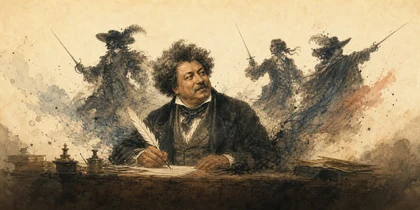
| Alexandre Dumas, l'inventeur du héros à la française | ce qu'on appelle |
| Élections 2026 : qui dirige les villes françaises ? | il faut + infinitive |
| L'égalité en France, une illusion ? | the relative pronoun qui |
| En France, le nucléaire à tout prix ? | dire que: reporting speech |
| L'amitié, un lien révolutionnaire ? | avec qui |
| Pourquoi regardons-nous ailleurs ? | comme si + imparfait |
The shelf also carries French radio at B1: franceinfo's report on guaranteed income and AI (free, no account needed), France Culture's « Le Fil sciences » on invasive plants, and France Inter on diesel prices.
All B1 extracts: French podcasts for B1.
B2: unscripted and fast
At B2 you are ready for French that isn't slowed down for anyone. France Culture's « Les Pieds sur terre » — Profession : ramasseur de poulets — is Nicole, 76, talking with no script: hesitations, stress, real spoken French. France Culture's international press review trains reported speech. See them all on French podcasts for B2.
Mistakes to avoid
- Only listening passively. It feels like learning. It mostly isn't. Use the transcript.
- Reading the transcript the whole time. Then you are reading, not listening. Listen first, read second, listen again last.
- Choosing podcasts that are too hard. If you understand less than half with the transcript, go down a level. Comprehensible input has to be comprehensible.
- Listening once and moving on. The second and third listens are where your ear actually improves.
- Never speaking. Shadow a few sentences every time. It costs two minutes.
Building a routine
Three extracts a week, done properly, is enough to feel a real difference in a month. Mix them with the news or with film scenes for variety. Every shelf has free lessons, and no account is needed to start. Not sure of your level? Find it here.
Questions learners ask
What is the best French podcast for beginners with a transcript?
For real beginners, graded stories with audio work better than podcasts. From A2, try France Inter's « Une histoire et… Oli »; from B1, InnerFrench.
Do podcasts really improve listening?
Yes — if you listen actively with a transcript and replay what you missed. Passive listening helps much less.
How long should I listen each day?
Fifteen focused minutes beats an hour in the background. Consistency matters more than length.
What is comprehensible input?
French you can mostly understand, with just enough new material to stretch you. A transcript and a level that fits are how you make a podcast comprehensible.
Can teachers use these extracts?
Yes. Every extract can be sent to a student in one click, with its homework. See Parisly for teachers.